

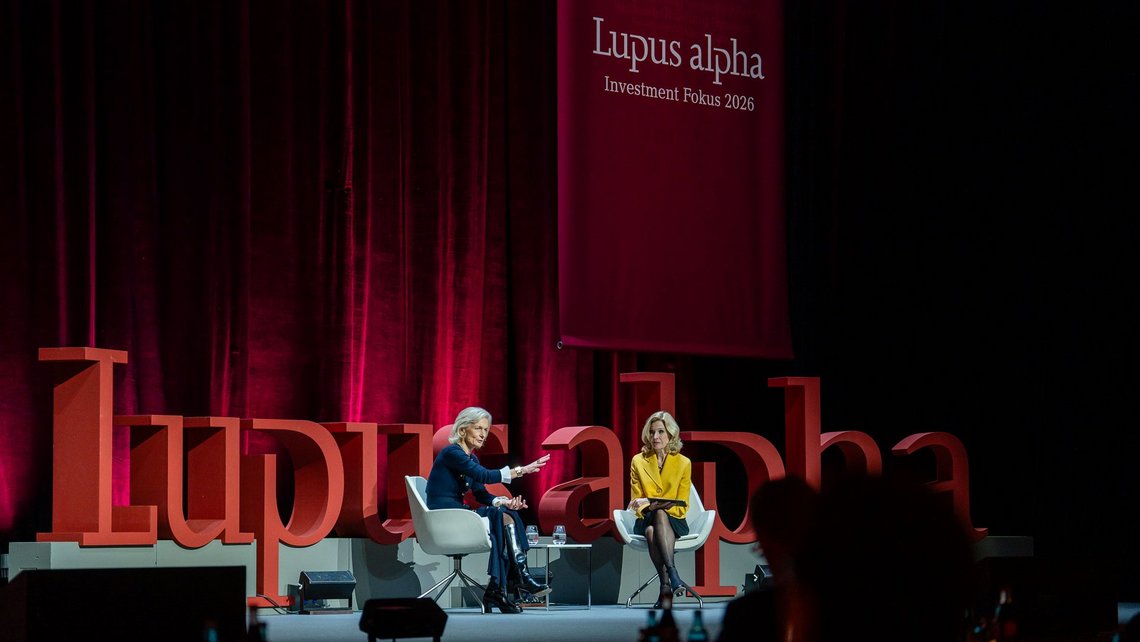
Zanny Minton Beddoes, editor-in-chief of The Economist, identified three major shockwaves shaping our time: geopolitical, economic, and technological change. Looking at geopolitics and Donald Trump's second term, she said: “We’re definitely witnessing the end of the post-war order.” The world is becoming more transactional, unpredictable, and less cooperative.
Economically, she observed a shift away from an open market economy towards protectionism and state intervention. “A lean state with a balanced budget is a thing of the past”, says Beddoes. High deficits and government intervention have become the new normal, especially in the US, but also in Europe.
Technologically, according to Minton Beddoes, we are at the beginning of an AI revolution that will profoundly change our lives and work. “The price of access to artificial intelligence will fall drastically, while machines’ ability to perform human functions and work will increase.”
The US has benefited from all three shockwaves in the short term, according to Minton Beddoes. But she warns: “I think the cost of this protectionism will rise.” She expects that risks to American democracy will increase and that a correction in US stock markets is likely. For Europe, Beddoes paints a mirror image: “In all three of the upheavals outlined, Europe is clearly one of the losers.” She criticised: “In the EU, regulation comes before innovation.”
It is crucial that Europe now acts decisively: "I believe there’s only a short and limited window of opportunity in which the EU must finally develop the necessary clout. Otherwise, we face not only gradual decline into becoming a museum piece, but something far more sinister.”